Paris Art Museum TicketsTickets & Tours
Paris · Orsay Museum • Tickets & Guided Tours

Orsay Museum Tickets & Tours 2026

Book Orsay Museum tickets and tours for 2026. Choose entry tickets, digital audio guide options, or guided visits, then check the time slot, inclusions, and access details before booking.

✓ 2026 ticket options ✓ Guided & self-guided options ✓ Independent visitor guide
Check ticket type & inclusions • Check time slot • Review tour format
i

Paris Art Museum Tickets is an independent visitor guide, not the official website of the attraction or operator. Some links are affiliate links, and we may earn a commission at no extra cost to you. We help you compare ticket types and access options.

02 · Bookable now

Most popular Orsay Museum tickets & tours

These six options appear in descending review order. Compare ticket type, access areas, guided or independent formats, visit length, traveller feedback, and the current starting price before choosing.

Interior view of the Musée d'Orsay in Paris 1 Most reviewed

Paris: Orsay Museum Entry Ticket

★★★★★ 4.7227874 · 28,394 reviews

This straightforward entry ticket has the most reviews among these six options. It also has the lowest supplied starting price, so it suits independent visitors focused on admission rather than added guide services.

  • Entry ticket
  • Independent visit
  • Most reviewed
From €13 Check live price
Check availability
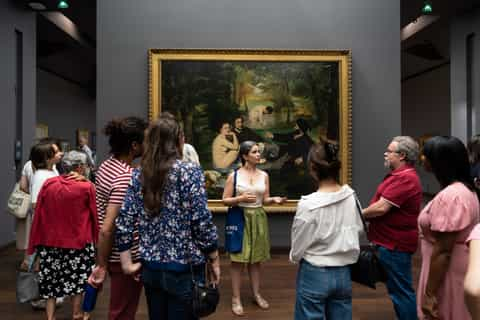
Musée d'Orsay gallery with visitors viewing paintings 2 Audio guide

Paris: Orsay Museum Entry Ticket and Digital Audio Guide App

★★★★★ 4.423107 · 4,966 reviews

This option adds a digital audio guide app to museum entry. Choose it if you want commentary while exploring independently, and check the booking details to compare its app format with the guided tours below.

  • Entry ticket
  • Digital audio guide
  • Independent visit
From €27 Check live price
Check availability
Guided visit inside the Musée d'Orsay 3 Expert guide

Musée d’Orsay: Guided Tour with an Expert

★★★★★ 4.793503 · 1,239 reviews

This expert-led tour has the highest rating among these six options. It suits visitors who prefer a guide over self-paced entry, though it has the highest supplied starting price in this comparison.

  • Guided tour
  • Expert guide
  • Highly rated
From €70 Check live price
Check availability
Sculpture displayed at the Rodin Museum in Paris 4 Combo ticket

Paris: Orsay Museum and Rodin Museum Combo Entry Ticket

★★★★★ 4.4280386 · 726 reviews

This is the only option here combining Orsay Museum and Rodin Museum entry. Consider it if both museums fit your plans; compare the booking details carefully with single-museum tickets before deciding.

  • Combo entry
  • Orsay and Rodin
  • Two museums
From €45 Check live price
Check availability
Visitors viewing artworks during a Musée d'Orsay tour 5 Guided option

Paris: Musée d’Orsay Ticket and Guided Tour

★★★★★ 4.5655975 · 673 reviews

This listing combines a Musée d’Orsay ticket and guided tour in one product. Its supplied starting price is lower than the other guided options shown, which may help if you want a guide with a lower entry point.

  • Museum ticket
  • Guided tour
  • Lower guide price
From €47 Check live price
Check availability
Paintings in the Musée d'Orsay collection 6 Masterpieces tour

Paris: Musée d’Orsay Masterpieces Guided Tour

★★★★★ 4.5615225 · 520 reviews

This guided tour is titled around the museum’s masterpieces, making it a focused alternative to independent entry. It starts below the expert-led tour above, but has fewer traveller reviews than every other option shown.

  • Guided tour
  • Masterpieces focus
  • Museum visit
From €59 Check live price
Check availability
03 · Side by side

Compare six popular Orsay Museum tickets and tours

Compare entry-only, audio guide, guided and two-museum options by starting price, traveller feedback and what each format adds. The main difference is independent entry versus guided commentary or admission to both museums.

OptionFromRatingReviewsTicket typeIncludesBest for
Paris: Orsay Museum Entry TicketStraightforward museum admission with the lowest supplied starting price. €13 4.7227874 28,394 Entry ticket Museum entry Travellers who want independent entry at the lowest supplied starting price.
Orsay Entry Ticket and Digital Audio Guide AppAdds app-based commentary while keeping the visit self-paced. €27 4.423107 4,966 Entry + audio guide Museum entry + digital audio guide app Visitors who want commentary but prefer to explore independently.
Musée d’Orsay: Guided Tour with an ExpertExpert-led museum tour with the highest rating in this comparison. €70 4.793503 1,239 Guided tour Expert-led museum tour Travellers prioritising an expert guide and stronger traveller feedback.
Orsay Museum and Rodin Museum Combo Entry TicketThe only listed ticket covering entry to both museums. €45 4.4280386 726 Combined ticket Orsay Museum + Rodin Museum entry Visitors planning to see both museums during their Paris stay.
Musée d’Orsay Ticket and Guided TourCombines museum admission and a guided tour at a lower entry point. €47 4.5655975 673 Guided tour Museum ticket + guided tour Travellers who want a guided visit with a lower supplied starting price.
Musée d’Orsay Masterpieces Guided TourGuide-led visit focused on the museum’s named masterpieces. €59 4.5615225 520 Guided tour Masterpieces-focused guided tour Visitors who want a guide-led introduction centred on key artworks.
04 · Decide

Which Orsay Museum ticket fits your visit?

These six options differ by ticket type, guide format, museum coverage, traveller feedback and starting price. Answer four quick questions to narrow the choice to the closest match.

1. What matters most for your museum visit?

2. How do you want to use your visit time?

3. How do you prefer to explore?

4. What is your main priority?

Answer the four questions

Your answers will narrow down entry-only, audio guide, guided and two-museum options.

The lowest starting price may not fit if you want commentary, a guide or entry to both museums.

05 · Before you book

What to check before visiting Orsay Museum

Tickets can look similar while using different entrances or offering different visit formats. Check the arrival details, tour inclusions and bag rules before paying, so your booking fits your plans and you know where to go.

Your timed ticket may use a different entrance

During renovation, timed tickets for collections or exhibitions use the Quay Entrance. Visitors with non-timed tickets, no ticket, luggage, or reduced mobility use the Forecourt Entrance, so following a general map pin can send you to the wrong queue.

Fix: Read the arrival instructions before leaving. Check which entrance matches your ticket type, then save that entrance on your phone. Access arrangements can change during the renovation, so check the current entry guidance again on your visit day.

A timed slot does not remove security screening

A reserved time controls museum access, but bag checks still apply at the entrance. Security delays can reduce the time you expected to spend inside, especially if you book a slot close to another plan.

Fix: Choose a time slot that leaves room before your next booking. Plan to arrive before the reserved time, and keep your bag simple for screening. Do not treat timed entry as a promise of immediate access.

A guided tour may not clearly include admission

Tour titles can promise an expert-led visit without clearly stating whether museum admission is included. If you assume entry is covered, you may need a separate ticket or have different arrival instructions from the guide.

Fix: Open the listing’s inclusions and booking conditions before paying. Confirm that museum entry is included, check the meeting instructions, and note whether the guide requires a separate ticket or a specific arrival time.

Oversized luggage can stop you entering the museum

Items larger than 56 × 45 × 25 cm are not allowed inside. Cabin-size cases must be stored, and the cloakroom does not accept valuables, documents, cash, cameras, laptops or mobile phones.

Fix: Measure your luggage before travelling to the museum. Leave oversized cases at your hotel, and carry valuables with you. If you bring a cabin-size case, allow time to use the free self-service cloakroom before entry.

06 · Know before you visit

Orsay Museum Visitor Information: Hours, Entry, Facilities & Rules

Use these details to plan your Orsay Museum visit. Find opening hours, realistic visit time, transport, accessibility, audio guides, facilities and the rules that matter once you are inside.

What are Orsay Museum opening hours and last entry?

The museum is closed on Mondays; last admission is 5:00pm, or 9:00pm on Thursdays.

Orsay Museum opens 9:30am to 6:00pm on Tuesday, Wednesday, Friday, Saturday and Sunday. On Thursday, it stays open until 9:45pm.

Galleries close at 5:30pm on standard days and 9:15pm on Thursdays. Temporary exhibitions have later last entry than the museum on standard days: 5:15pm.

The museum also closes on 1 May and 25 December. Access can change during exceptional closures or busy periods.

How long should I allow for Orsay Museum?

Most first-time visitors allow about 2 to 3 hours for the main collections and the former station building.

A shorter visit can work if you focus on a few galleries. A one-hour visit means choosing only selected works and moving quickly between floors.

Leave time for security screening and for finding your way around the building. Do not plan a full visit from a late-afternoon entry slot.

If Impressionist galleries are your priority, visit them early in your route. These areas can become crowded as the morning progresses.

What does a standard Orsay Museum ticket include?

Standard admission covers one entry to the permanent collections and temporary exhibitions, subject to availability.

Your ticket allows one admission. Once you leave the museum, you cannot return on the same ticket.

Temporary exhibition access is included with standard admission when capacity allows. Ground-floor temporary exhibitions close to new visitors 45 minutes before museum closing time.

Keep this in mind if you plan to leave for lunch. The museum has food venues inside, so you can take a break without giving up your entry.

How do I get to Orsay Museum by public transport?

Musée d’Orsay on RER C is directly by the museum; Solférino on Métro line 12 is another nearby option.

The museum also lists buses 63, 68, 69, 73, 83, 84, 87 and 94. The visitor address is Esplanade Valéry Giscard d’Estaing, 75007 Paris.

Taxi and specialised-vehicle drop-off and pick-up are on quai Anatole-France. This is useful for visitors who need a closer accessible arrival point.

Renovation work can change access routes around the building. Follow the entrance instructions for your ticket rather than relying on an older route map.

Are there cafés, toilets and water fountains inside?

The museum has restaurants, cafés, free Wi-Fi, numerous toilets and water fountains for refilling bottles.

Food options include the Restaurant, Café Campana, Café de la Gare and the summer Terrasse. These venues require a museum entrance ticket.

Water fountains are near restrooms on level -1, at the back of the Nef near the Paris area, and on level 1 in the waiting area. There is also a fountain outside at the bottom of the forecourt steps.

A baby area is on level -1, beside the adult group reception area. Connect to the free Musee_Orsay_Public Wi-Fi network inside.

Is Orsay Museum accessible for wheelchair users and strollers?

The museum, exhibitions and commercial areas are accessible by elevators and ramps for visitors with limited mobility and strollers.

Visitors with disabilities and one companion receive free priority admission with valid proof. During renovation, visitors with disabilities can use Entrance 2 – Forecourt.

Wheelchairs, folding seats, canes and strollers can be borrowed in exchange for ID. They cannot be reserved in advance.

Guide and assistance dogs, including dogs in training, are welcome. Staff may ask for proof of identity for the dog.

Can I get an audio guide at Orsay Museum?

Onsite rental audioguides cover more than 300 permanent-collection commentaries in several languages.

Rental audioguides are collected at the museum. They are available in French, German, English, Chinese, Korean, Spanish, Italian, Japanese, Portuguese and Russian.

There is also a children’s route for ages 6 to 12 in French and English. Rental devices include induction loops for visitors with hearing aids.

A phone-download guide is also available by QR code or confirmation-email link, but it covers the Mary Cassatt exhibition only. It does not cover the permanent collections or other exhibitions.

Can I take photos inside Orsay Museum?

Personal photos and video are allowed if they do not disturb others, block circulation or put works at risk.

Flash, lamps, tripods, stands and telescopic arms are not allowed. Camera supports and lighting equipment must be left in the cloakroom.

Some works and temporary exhibitions have their own photography restrictions. Look for notices at the exhibition entrance or beside the work.

Keep your camera or phone with you rather than leaving it in the cloakroom. Cameras, laptops and mobile phones are not accepted there.

Can I visit Orsay Museum with children?

Under-18s qualify for free admission, but children under 13 must stay with a responsible adult.

Strollers can be borrowed with ID. Prams, large strollers and baby carriers with metal frames are not allowed inside the museum.

The baby area on level -1 is next to the adult group reception area. Numerous restrooms are available, including some adapted for visitors with disabilities.

The children’s audioguide route is designed for ages 6 to 12. It gives families a focused way to explore the permanent collection.

Is there a dress code at Orsay Museum?

Normal day clothes are fine, but the museum does not allow swimwear, underwear, bare feet or clothing that conceals the face.

Visitors cannot enter shirtless, barefoot or wearing clothing designed to conceal the face. The museum may also refuse entry to people under the influence of alcohol.

Inside, do not remove your shoes or wear clothing likely to disturb public peace. These are conduct rules rather than a formal dress code.

The museum is indoors, so your clothing choice matters less than carrying only what you can manage through security and around the galleries.

07 · In depth

How to understand the Orsay Museum beyond its famous paintings

The Musée d’Orsay is not simply a home for Impressionism. It connects the art of 1848 to 1914 with a building made for movement, technology and public spectacle. Notice the former station as carefully as the paintings: its vast hall changes how the collection feels.

At Orsay, a railway station and a changing art world tell one connected story.

A station built for the modern city

Victor Laloux designed the Orsay railway station and hotel for the 1900 Universal Exhibition. The complex opened on 14 July 1900, when Paris was presenting industry, travel and design as signs of a modern capital.

The museum conversion keeps that scale visible. The central nave, high roof and great clocks remind visitors that this was built to receive crowds and trains, not originally to display paintings.

Art made during an age of change

The museum covers western artistic creation from 1848 to 1914. Those years saw revolutions, rapid urban growth, rail travel, new forms of leisure and major changes in how artists represented ordinary life.

Manet’s Olympia challenged expectations about the nude in modern painting. Renoir’s Bal du moulin de la Galette turns a Montmartre gathering into a study of light, movement and social life.

In the Impressionist and Post-Impressionist galleries, do not look only for famous names. Compare how Monet, Renoir and Van Gogh use colour and brushwork to make light, weather or emotion feel active on the surface.

The building and collection are deliberately in dialogue

The decision to create the museum was made on 20 October 1977. ACT-Architecture, led by Bardon, Colboc and Philippon, transformed the station, while Gae Aulenti shaped the interior layout from 1980.

The result does not hide the old station behind neutral gallery walls. Sculpture, painting and architecture appear in changing relationships, with the station’s long axis repeatedly pulling your eye back toward the centre.

How to read the museum

Start by seeing the nave as the organising line, then move outward into the galleries. The clock, the river-facing setting and the paintings all belong to a Paris shaped by modern life. Once you see that connection, Orsay becomes more than a sequence of masterpieces.

08 · FAQ

Musée d’Orsay Paris: Questions Visitors Ask Before Booking

How much are Musée d’Orsay tickets in 2026?

Musée d’Orsay offers standard admission tickets, reduced rates and free entry for eligible visitors. Ticket prices depend on the booking method, visitor category and selected experience.

Guided tours, audioguides and special activities may cost extra. Check the final price, admission inclusions and cancellation conditions before booking.

Do I need to book Musée d’Orsay tickets in advance?

Advance online booking is strongly recommended, especially during weekends, school holidays and busy tourist periods. A timed ticket helps you plan your museum visit around a reserved entry window.

The museum is undergoing renovation work from March 2026 through summer 2028, which affects visitor entrances. Check your ticket and the current entrance instructions before travelling.

Can I buy Musée d’Orsay tickets at the entrance?

Yes. Visitors can generally purchase admission tickets at the museum, subject to availability. However, arriving without a reservation may involve additional waiting.

During the renovation period, visitors without timed tickets use the Forecourt Entrance. Visitors holding timed-entry tickets should follow signs for the Quay Entrance.

What is included in a standard Musée d’Orsay admission ticket?

A standard museum ticket includes access to the permanent collections and temporary exhibitions covered by the selected admission category, subject to gallery availability and museum conditions.

A personal guide, audioguide, food and drinks are not automatically included. If you book a third-party ticket, check the exact services listed in the product description.

What are Musée d’Orsay’s opening hours and closing days?

Musée d’Orsay normally opens Tuesday through Sunday from 9:30 AM to 6:00 PM. On Thursdays, the museum stays open until 9:45 PM.

The museum is closed on Mondays. Galleries normally begin closing before the building itself, so allow enough time to see your preferred artworks.

Is Musée d’Orsay free on the first Sunday of the month?

Yes. The museum offers free admission on the first Sunday of each month, but visitors must reserve a free timed-entry slot in advance.

Free admission does not guarantee entry without a reservation. Book your preferred time early and bring your confirmation when visiting.

Who can visit Musée d’Orsay for free?

Visitors under 18 can enter free. Free admission also applies to eligible EU or EEA nationals aged 18–25 and certain qualifying residents, students and visitors with disabilities.

Visitors with disabilities and one accompanying person receive free priority admission with valid documentation. Other free-entry categories may require a reservation and proof of eligibility.

What are the best paintings and artworks to see at Musée d’Orsay?

Musée d’Orsay is famous for its Impressionist and Post-Impressionist collections. Highlights include works by Vincent van Gogh, Claude Monet, Pierre-Auguste Renoir, Edgar Degas and Édouard Manet.

Popular artworks include Van Gogh’s Starry Night Over the Rhône, Renoir’s Bal du moulin de la Galette and Manet’s Olympia. Displays can change because of loans, restoration or temporary exhibitions.

How much time should I spend at Musée d’Orsay?

Allow approximately 2–3 hours for a comfortable visit covering the main collections, famous paintings and the museum’s historic railway-station architecture.

If you enjoy art, want to attend a temporary exhibition or plan to eat inside, allow 3–4 hours. Visitors with limited time can focus on selected galleries and major highlights.

Is a Musée d’Orsay guided tour worth booking?

A guided tour can be useful for first-time visitors who want to understand the museum’s major artworks, Impressionist techniques and the historical background of the collections.

Compare the tour duration, language, meeting point and group size. Some guided-tour products include museum admission, while others require a separate entrance ticket.

Can I take photos and videos inside Musée d’Orsay?

Yes. Photography and video recording for personal use are generally permitted, provided you do not use flash, disturb other visitors or obstruct the galleries.

Some artworks and temporary exhibitions may have additional restrictions. Tripods, lighting equipment and commercial photography require special arrangements or authorisation.

Are there restaurants and cafés inside Musée d’Orsay?

Yes. The museum has several dining options, including its historic restaurant, Café Campana near the Impressionist galleries and Café de la Gare beneath the main nave.

A seasonal terrace also offers refreshments and views over Paris when weather conditions allow. Food, drinks and restaurant purchases are not included in a standard admission ticket.

Is Musée d’Orsay suitable for children and wheelchair users?

Yes. Families can explore the museum together, and visitors under 18 qualify for free admission. The museum offers family activities, children’s audioguides and baby-changing facilities.

Elevators and ramps provide access for visitors with reduced mobility. Wheelchairs, folding seats and compact strollers can be borrowed subject to availability. Large prams and metal-framed baby carriers are not permitted.

How do I get to Musée d’Orsay in Paris?

Musée d’Orsay is located at Esplanade Valéry Giscard d’Estaing, 75007 Paris, on the Left Bank of the Seine. The nearest RER station is Musée d’Orsay on Line C.

You can also take Métro Line 12 to Solférino and walk to the museum. During renovation work, check whether your ticket directs you to the Quay Entrance or Forecourt Entrance.

Can I cancel, change or get a refund for Musée d’Orsay tickets?

Cancellation and refund conditions depend on the ticket type and booking provider. Standard museum admission, guided tours and third-party packages may have different terms.

Review the cancellation deadline, date-change conditions and refund policy before purchasing. If you booked through an external provider, contact that provider directly about changes to your reservation.

09 · Also in Paris

The city these painters were looking at

Each attraction has its own visitor guide, covering opening hours, ticket options and practical route advice. A great deal of what hangs here was painted within a few miles of the building — the river outside, the opera house to the north, Monet’s garden an hour west. The station itself was built for the 1900 exposition and stopped taking long-distance trains in 1939.

Museums & galleries

  • Louvre Museum Across the river, and its chronology stops where this one begins. Half a day, on its own timed entry.
  • Musée de l’Orangerie The sequel in one room: Monet’s late water lilies, painted after everything hanging here. Ten minutes on foot.
  • Mona Lisa tours A guided route to the Louvre’s one unmissable painting — three centuries earlier than anything on these walls.
  • Chocolate Museum North of the river near the boulevards: short, indoors, and an easy hour once the galleries have worn you out.
  • Museum of Illusions Optical tricks rather than optical painting, and a quick stop that needs no date booked ahead.
  • Science Museum La Villette, north-east, and a half-day — built for children in a way these galleries are not.
  • Paris Aquarium West at Trocadéro beside the tower, and the better call if anyone in the group is under ten.

Monuments & churches

  • Eiffel Tower Built for the 1889 exposition as this station was for 1900 — both left standing once the fair moved on.
  • Arc de Triomphe The far west end of the city, up the Champs-Élysées, and a stair climb rather than a gallery floor.
  • Sainte-Chapelle Six centuries older and made entirely of glass. Fifteen minutes east on the island, and best in sunshine.
  • Notre-Dame Cathedral On the same island just beyond it, and the two are nearly always one morning rather than two.
  • The Panthéon Up the hill behind, on this side of the river, where the crypt rather than the dome is the visit.
  • Napoleon’s Tomb West along this same bank under the gold dome, about twenty minutes away, and an hour inside.
  • Paris Catacombs South, and well below ground. Timed, limited and gone long before the day — book that one first.

Shows, food & workshops

  • Cabaret shows The Montmartre halls these painters drew for are still working, and still north of the river.
  • Paris Opera House Degas painted its dancers. The building is twenty minutes north and sells daytime visits as well as seats.
  • Light show An evening light show inside the Invalides dome, fifteen minutes west along this same bank.
  • Perfume workshop Seated and by appointment for an hour or two, and a fair antidote to a long morning on your feet.
  • Baking classes A morning in a kitchen, finishing in good time for an afternoon on these floors.
  • Fashion tour The couture houses on the Right Bank — the trade that dressed the women in these portraits.

On the water, tours & day trips

  • Seine river cruises The reach these painters worked along, seen from the water. The piers are minutes from the door.
  • Evening river cruise The same river after dark, lit in a way that none of these painters ever saw it.
  • Canal Saint-Martin cruise North-east, through locks and a covered vault — the working Paris these landscapes leave out.
  • Underground tours Below the streets, guided and in small groups. Nothing to do with the galleries, which is rather the appeal.
  • Bus tours Stops along the quays outside, and it earns its ticket on the distance up to Montmartre.
  • Sainte-Marguerite Island An island excursion rather than a city stop — check the departure point and the length of the day.
  • Mont-Saint-Michel A long day west on an early start, and an abbey rather than anything in paint.
  • Giverny Monet’s own garden, an hour and a quarter west — the subject of his last thirty years of work.
  • Paris Zoological Park Vincennes, east, outdoors and a half-day: a complete change of register from a gallery day.

Each guide is maintained by our Independent guides, with factual details checked against official sources where available. We do not sell tickets directly. Bookings are handled by third-party booking partners, and we may earn a commission at no additional cost to you.